

The Importance of Identifying Cribriform Morphology in Prostate Biopsies.
In prostate cancer diagnosis, risk stratification and treatment decisions, the fine details can make all the difference on the quality of a patient’s life, or their outcomes. One such critical detail is cribriform morphology, a distinct architectural pattern observed in prostate cancer histology that has emerged as a potent indicator of disease aggressiveness.
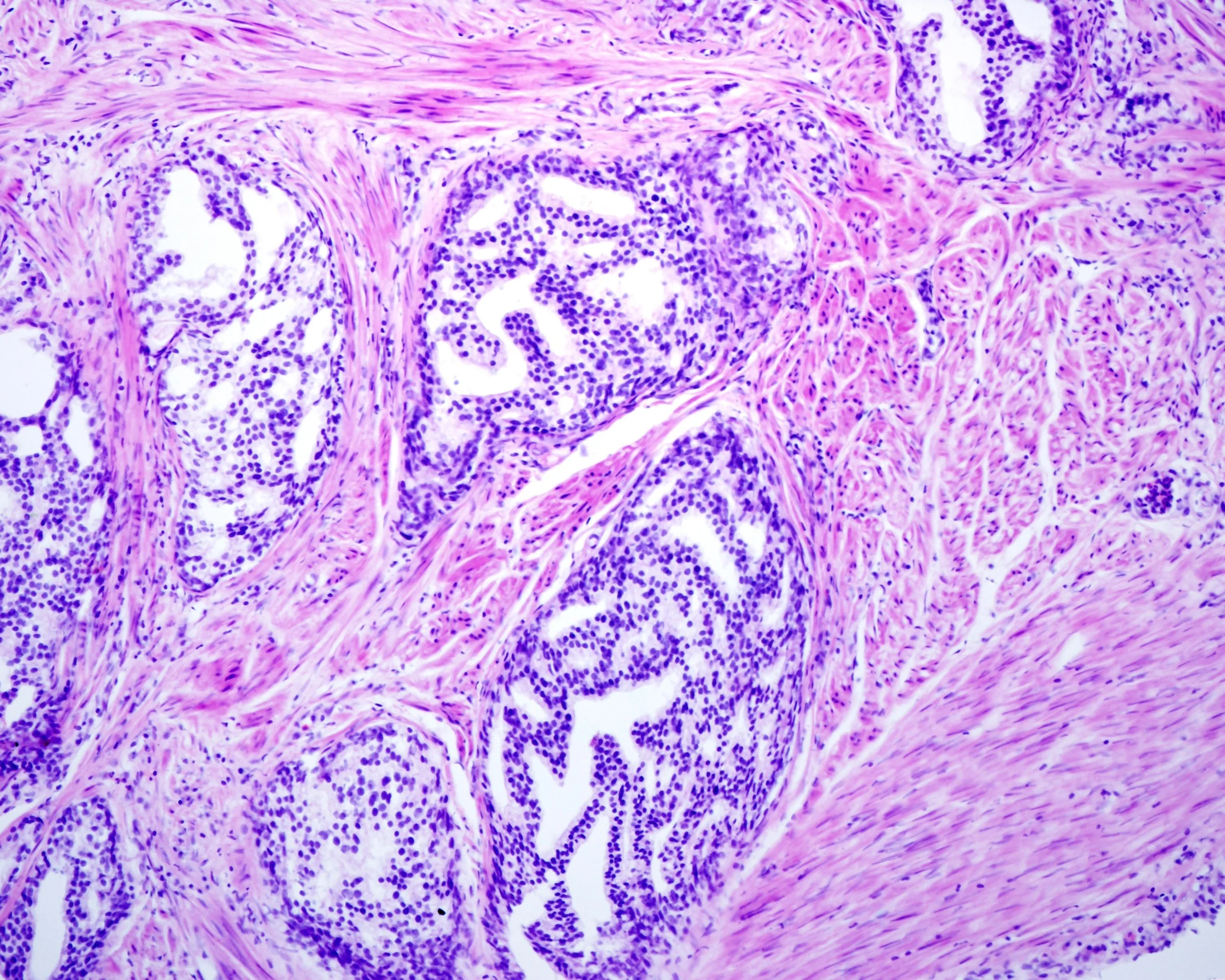
What Is Cribriform Morphology?
Cribriform morphology refers to a histologic pattern where cancerous glands form sieve-like or perforated structures. This architecture is often found in association with higher-grade prostate cancer and signals a higher risk of progression, metastasis, and mortality.
Clinical Importance
The clinical importance of cribriform morphology is well-documented. Research consistently demonstrates that its presence is strongly associated with worse outcomes, independent of other prognostic indicators such as Gleason score or PSA levels (1,2). As a result, its detection is becoming an essential criterion in guiding personalized treatment decisions, including the choice between active surveillance and more aggressive interventions.
Limitations of Current Diagnostic Approaches
However, the integration of cribriform morphology into clinical practice is not without hurdles. A major challenge lies in the limitations of current biopsy techniques and diagnostic tools to reliably detect it. Traditional biopsy sampling may miss cribriform patterns altogether due to sampling error or the subtlety of its features.
A study found that 40% of men were false negative for cribriform at initial biopsy when compared to analysis post radical prostatectomy (3).
This diagnostic blind spot is further compounded by the limitations of first-generation genomic tests. These tests, once heralded for their promise in personalizing cancer care, are not developed or validated to account for contemporary clinical features such as cribriform morphology. As such, they may provide incomplete risk assessments and guide suboptimal management strategies.
Clinical Consequences of Under-Detection
The under-detection of cribriform morphology is not merely a theoretical concern—it has real-world consequences. When cribriform architecture goes unrecognized, clinicians may recommend active surveillance for patients who harbor aggressive disease. This misclassification can lead to delays in initiating definitive therapy, allowing the cancer to progress unchecked.
Conversely, a precise identification of cribriform patterns can act as a red flag, prompting timely interventions and potentially improving long-term outcomes. As such, the ability to detect cribriform morphology with greater accuracy is more than a diagnostic detail—it’s a lifesaving necessity.
Seeing the Unseen to Save Lives
What we see—and just as importantly, what we miss—can alter the trajectory of a patient’s life. Cribriform morphology stands as a vital marker of aggressive disease, yet its detection remains fraught with challenges.
As the oncology community pushes toward precision medicine, recognizing and addressing the limitations in identifying cribriform patterns must be a priority. Refining biopsy techniques, integrating advanced imaging modalities, and utilizing next-generation genomic assays that can better capture high-risk features like cribriform morphology must be prioritized.

One such example of a next generation test is theOncoAssure Prostate test which was developed to be prognostic for contemporary risk identifiers such as cribriform morphology.
Only by seeing the unseen can we truly tailor treatments to the needs of every patient—and ultimately, improve survival and quality of life for men facing prostate cancer.
References:
1: Yahşi S, Ceylan C, Kizilkan Y, Şenel S, Ceviz K. Cribriform Morphology in Gleason Score 3+4 Moderate-Risk Prostate Cancer: Is it Risk Factor for Biochemical Recurrence? Arch Esp Urol. 2022 May 28;75(4):325-329. doi: 10.56434/j.arch.esp.urol.20227504.46. PMID: 35818912.
2: Montironi R, Cimadamore A, Gasparrini S, Mazzucchelli R, Santoni M, Massari F, Cheng L, Lopez-Beltran A, Scarpelli M. Prostate cancer with cribriform morphology: diagnosis, aggressiveness, molecular pathology and possible relationships with intraductal carcinoma. Expert Rev Anticancer Ther. 2018 Jul;18(7):685-693. doi: 10.1080/14737140.2018.1469406. Epub 2018 Apr 27. PMID: 29699428.
3: Hollemans E, Verhoef EI, Bangma CH, Schoots I, Rietbergen J, Helleman J, Roobol MJ, van Leenders GJLH. Concordance of cribriform architecture in matched prostate cancer biopsy and radical prostatectomy specimens. Histopathology. 2019 Sep;75(3):338-345. doi: 10.1111/his.13893. Epub 2019 Aug 2. PMID: 31045262; PMCID: PMC6851781.